Cost Comparison
Wood is generally the lowest upfront cost, running about $20 to $35 per linear foot installed. Vinyl runs higher, around $25 to $40 per linear foot, reflecting the material cost of PVC panels. Aluminum ornamental fencing sits at the top of the range, typically $30 to $50 per linear foot, due to the powder-coated metal and more labor-intensive picket assembly. See our full fence cost breakdown for the complete per-material pricing table.
Maintenance
This is where the three materials diverge the most. Wood needs cleaning and resealing or restaining every 1 to 2 years to prevent graying and rot — skipping this is the single biggest reason wood fences fail early in Florida. Vinyl needs essentially no maintenance beyond an occasional hose-down; it never needs painting or staining. Aluminum is similarly low-maintenance, with a factory powder coat that resists chipping and doesn't require refinishing under normal conditions.
Longevity
Well-maintained wood fencing typically lasts a solid number of years but its lifespan is directly tied to how consistently it's resealed. Vinyl and aluminum both tend to outlast wood with minimal upkeep, since neither rots, warps, or attracts termites the way untreated or under-maintained wood can. Aluminum's powder coating and vinyl's UV-stabilized PVC are both built specifically to resist the kind of sun and moisture exposure Marion County sees most of the year.
Heat, Humidity & Storm Performance
All three materials can perform well in a storm when installed with proper post depth and spacing — that's more about installation quality than material choice. Where they differ is day-to-day exposure: wood is the most vulnerable to humidity-driven rot and UV graying if maintenance lapses; vinyl handles heat and moisture with no degradation but can become brittle with age in extreme sun exposure over many years; aluminum shrugs off both heat and humidity without warping, though a very hard impact can bend a picket where a wood board might simply crack (and be repaired board-by-board more easily).
Resale & Curb Appeal
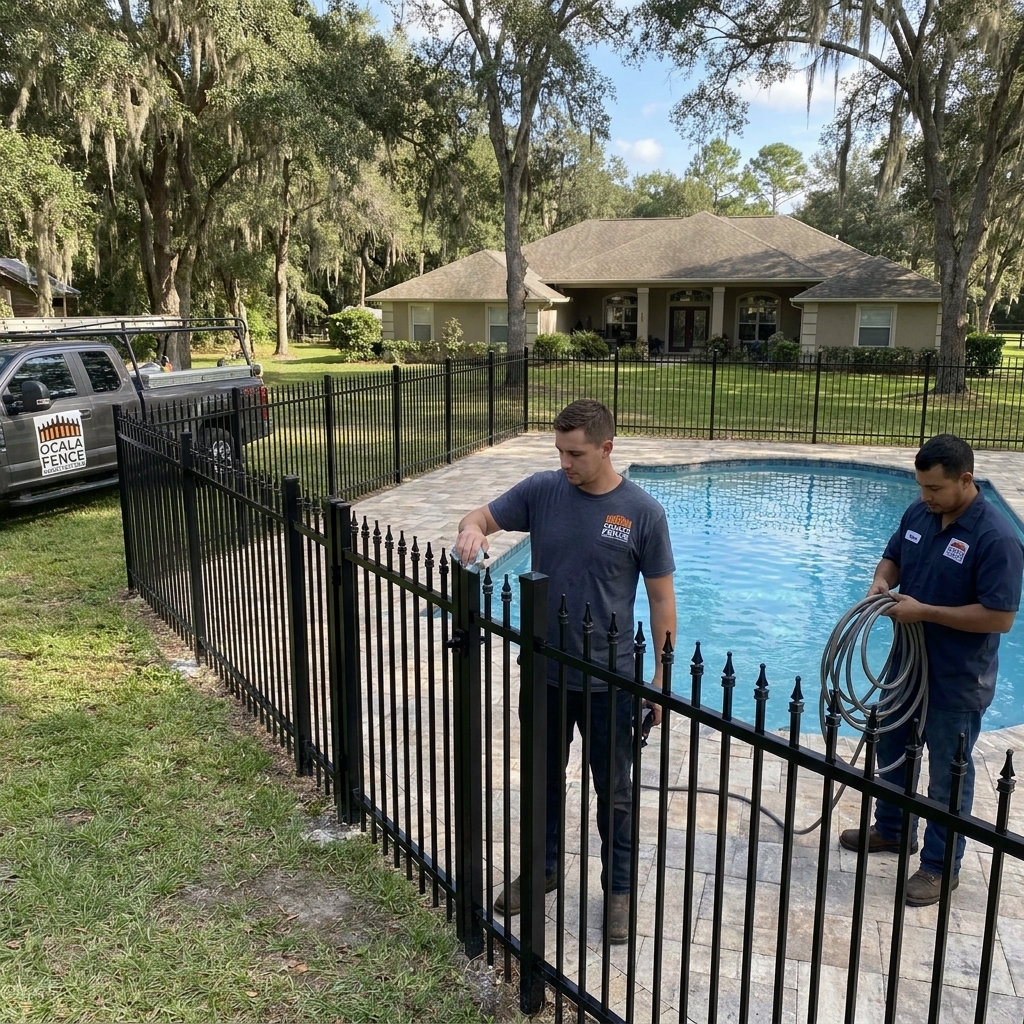
Aluminum ornamental fencing tends to read as the most upscale option, especially around pools and front yards, and is a common requirement in deed-restricted communities for that reason. Vinyl privacy fencing offers a clean, uniform look that many buyers appreciate for its low upkeep. Wood offers the most customization — height, board style, stain color — and remains a strong value pick for buyers who want maximum privacy without the higher per-foot cost of vinyl or aluminum.
Quick Comparison
- Best value for privacy: Wood (wood privacy fencing)
- Best for zero maintenance: Vinyl (vinyl fencing)
- Best for pools & curb appeal: Aluminum (aluminum ornamental fencing)
- Best for budget/rural perimeters: Chain link (chain link fencing)
PAA: Choosing a Fence Material for Florida
Which fence material lasts longest in Florida's climate?
Aluminum ornamental fencing typically lasts the longest in Florida's heat and humidity since it's powder-coated metal that won't rot, warp, or need refinishing. Vinyl is close behind and also highly resistant to moisture damage. Wood can last many years too, but only with consistent resealing — skipping that maintenance is the main reason wood fences fail earlier than the other two materials here.
Is vinyl or aluminum fencing better for a pool area?
Both work well around pools since neither rusts or rots from splash exposure, but aluminum ornamental fencing is the more common choice because its open picket style doesn't block sightlines to the pool the way a solid vinyl privacy panel would — which matters for supervising kids. Vinyl privacy panels are a better fit when you want to screen the pool area from view entirely.
Does wood fencing hold up to Florida humidity and storms?
Pressure-treated wood holds up reasonably well structurally when it's properly set and maintained, but Florida's humidity accelerates surface weathering, graying, and eventually rot if it isn't resealed every 1 to 2 years. In terms of storm wind resistance, a well-built wood fence performs comparably to vinyl when set to proper post depth, though individual boards are more prone to cracking from wind-driven debris than a solid vinyl panel.
Still Deciding? Talk to a Local Installer
The right material really does depend on your priorities — budget, maintenance tolerance, privacy needs, and the look you want. We'll walk your property, talk through the tradeoffs above for your specific situation, and give you a free written estimate across whichever materials you're considering. Call us at (352) 763-3520.
Also see: How Much Does It Cost to Install a Fence in Ocala?, How to Prepare Your Yard for a New Fence Installation, and Best Fences for Florida Hurricane Season